
DA May Invoke GNU Terms For Joburg Coalition

The Democratic Alliance is considering invoking the terms of the national Government of National Unity (GNU) to demand a role in Johannesburg’s coalition government, but the city’s ANC leadership is reportedly resisting the move, with insiders saying, “The DA is not our friend; it is not a friend of the poor.”
The political maneuvering comes as Johannesburg finds itself with a hung council following the 2026 Local Government Elections, forcing parties into complex negotiations to form a stable government.
THE GNU PRECEDENT
The DA’s strategy is rooted in the national GNU formed after the 2024 general elections, which brought the ANC, DA, and other parties into a coalition government at the national level.
Having secured 34.79% of the vote in Johannesburg and 91 seats, making it the largest party in the metro, the DA argues that the same principle of proportional representation and collaborative governance should apply at the local level.
However, the Joburg ANC appears unwilling to extend the national arrangement to the city.
“The DA is not our friend; it is not a friend of the poor,” an ANC insider reportedly said, reflecting deep-seated distrust between the two parties at the local level.
ACTIONSA’S OPPOSITION
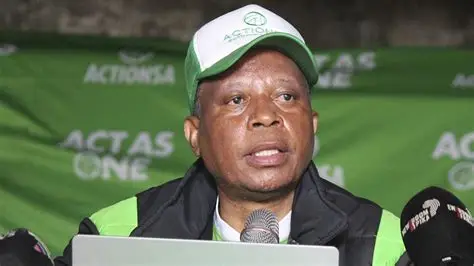
The DA’s path to a coalition is further complicated by ActionSA’s refusal to work with DA mayoral candidate Helen Zille.
ActionSA leader Herman Mashaba has ruled out any coalition arrangement that includes Zille, citing irreconcilable differences over the party’s approach to governance and service delivery.
This leaves the DA with limited options for forming a majority, as it cannot rely on ActionSA’s 44 seats to reach the 136-seat threshold.
THE MATH OF THE COUNCIL
Johannesburg’s 270-seat council requires 136 seats for an outright majority.
| Party | Vote % | Seats |
|---|---|---|
| DA | 34.79% | 91 |
| ANC | 20.25% | 63 |
| ActionSA | 16.27% | 44 |
| EFF | 6.52% | — |
| MK Party | 5.57% | — |
With ActionSA refusing to work with the DA, and the ANC resisting a GNU-style arrangement, Johannesburg faces the prospect of prolonged negotiations and potential instability.
WHAT THIS MEANS FOR SOWETO
For Soweto residents, the political deadlock has real consequences.
Whoever governs Johannesburg will control the budget for water infrastructure, electricity maintenance, housing allocation, and local economic development, all critical issues for the township.
If the DA and ANC cannot reach an agreement, the city could face a minority government or a fragile coalition that struggles to make decisions on the issues that matter most to residents.
“We don’t care who sits in the mayor’s chair,” said a Diepkloof resident who asked not to be named. “We care about whether we have water and whether our children have jobs. The politicians need to stop fighting and start fixing.”
WHAT HAPPENS NEXT
Coalition negotiations are expected to continue throughout the week, with the IEC expected to formally announce the final seat allocation in the coming days.
The ANC’s National Executive Committee is also expected to weigh in on the coalition strategy for Johannesburg, given the city’s status as the economic heartbeat of South Africa.