
South Africa’s National Dialogue Kicks Off
South Africa’s National Dialogue Kicks Off
Natalie Nyathi
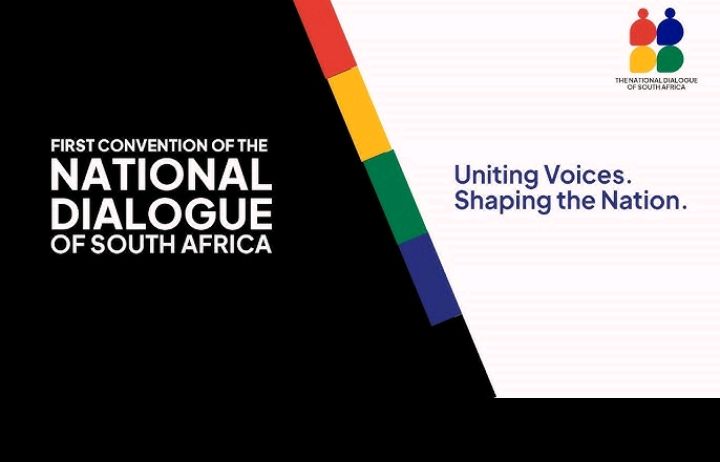
South Africa’s National Dialogue has kicked off today, August 15, 2025, with its first National Convention, a pivotal event aimed at charting a course for the nation’s future. The convention, held at the University of South Africa’s ZK Matthews Great Hall in Pretoria, is envisioned as a platform for diverse voices to converge, addressing pressing issues and collectively reimagining the country’s trajectory.
President Cyril Ramaphosa is leading the government delegation and officially opened the convention, underscoring the initiative’s significance. Approximately 1,000 delegates representing a broad spectrum of South African society are participating, including government officials, political parties, civil society organizations, business leaders, labor representatives, traditional leaders, religious figures, cultural workers, sports organizations, and voices from women, youth, and various communities.
The National Dialogue is conceived as a long-term process intended to rebuild trust, confront deep-seated challenges, and shape a shared future for South Africa. It seeks to assess the progress made over the past 30 years of democracy, identify persistent obstacles, and collaboratively work towards a more prosperous and equitable society.
The first National Convention serves as an agenda-setting and roadmap-building exercise, laying the foundation for an inclusive and citizen-led dialogue. The dialogue will unfold in phases, encompassing public discussions in all nine provinces, sectoral engagements, and community dialogues across both rural and urban areas. The process will culminate in a second National Convention, where outcomes will be consolidated into a “People’s Compact.” This compact will outline commitments from citizens, sectors, government, business, labor, civil society, and families to collectively heal and rebuild the nation.
The National Dialogue is expected to address critical challenges such as poverty, inequality, and hunger, economic transformation and job creation, social cohesion and nation-building, gender-based violence and community safety, governance, accountability, and participatory democracy, and land reform and food security.
Despite the ambitious goals, the National Dialogue has faced criticism and challenges. Several prominent legacy foundations, including the Desmond and Leah Tutu Legacy Foundation and the Thabo Mbeki Foundation, have withdrawn from the process, citing concerns about government control and a rushed timeline. The Democratic Alliance, a major coalition partner in the Government of National Unity, has also pulled out, dismissing the convention as an “expensive talk shop.” Critics express concerns about a lack of clear goals and decisive follow-up mechanisms.
Some analysts emphasize the need for concrete action, timelines, and tangible results, cautioning against the dialogue becoming merely a forum for discussion without practical outcomes. Concerns have also been raised regarding the inclusivity and representativeness of the process, despite the participation of numerous organizations and delegates.
President Ramaphosa has responded to the criticisms, asserting that the dialogue will proceed as planned and that the withdrawal of certain organizations does not undermine its legitimacy. He emphasized that the convention is just the beginning of a broader, nationwide engagement and that the process will ultimately reach communities, industries, households, and other sectors.
The success of the National Dialogue hinges on genuine public participation, inclusivity, and the ability to translate discussions into concrete actions that address South Africa’s most pressing challenges. The coming months will be crucial in determining whether this ambitious initiative can truly foster unity, rebuild trust, and pave the way for a more prosperous future for all South Africans.