Johannesburg Without Speed Cameras For Nearly Ten Months
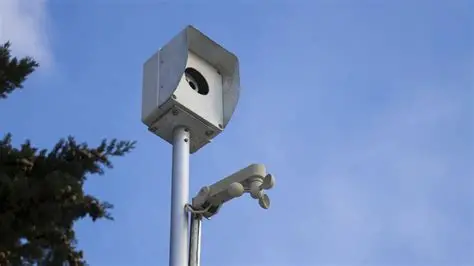
Johannesburg motorists have been driving without camera-based speed enforcement for nearly ten months, after the city’s speed cameras were switched off when its contract with service provider Syntell lapsed in December 2025.
The three-year contract expired on 23 December 2025, and Syntell removed its cameras and back-office systems, leaving the Johannesburg Metro Police Department (JMPD) without any of its own speed cameras.
The impact has been significant. In the 2023/24 financial year, the JMPD generated almost R47 million from all traffic fines. In the previous annual reporting cycle, approximately 3.1 million of the 3.4 million traffic fines issued were generated from speed camera images, with only about 300,000 handwritten fines issued by officers on patrol.
Traffic fines have historically generated about R50 million per year for the municipality.
TENDER PROCESS UNDERWAY
JMPD spokesperson Superintendent Xolani Fihla said the tender process to appoint a new service provider is still underway, and the department is navigating the mandatory Municipal Finance Management Act (MFMA) procurement process.
“Enforcement operations were temporarily suspended, as access to back-end systems ended. The city is currently navigating the mandatory Municipal Finance Management Act procurement process to appoint a new service provider,” Fihla said.
He explained that because the contracts involve significant public funds, strict compliance with the MFMA is essential. “We must ensure that the process is entirely transparent and legally sound to avoid any future operational disruptions”.
OFFICERS REDEPLOYED
In the interim, officers previously tasked with speed enforcement have been redeployed to high-impact physical policing, including high-visibility patrols and roadside checkpoints.
“The JMPD has intensified its physical deployment strategy to deter lawlessness. We want to issue a stern warning to all road users: Johannesburg is absolutely not a speed-free zone,” Fihla said.
The JMPD has also increased static roadblocks and moving patrols targeting known speeding hotspots, particularly during high-risk weekend hours and night shifts.
CRITICISM AND CONCERNS
The prolonged outage has drawn sharp criticism from opposition parties and industry bodies.
The Democratic Alliance’s shadow MMC for Public Safety, Solomon Maila, said it was “mind-boggling” that the department allowed the Syntell contract to lapse without ensuring a new procurement process was set in motion.
The Motor Industry Staff Association (MISA) expressed concern about road safety. “What this basically means is that there is a massive reduction in traffic and law enforcement,” said MISA spokesperson Phakamile Hlubi-Majola. “This ultimately leaves workers and communities more vulnerable to accidents, more vulnerable to traffic violations, which means we are less safe on our roads”.
Wayne Duvenage, CEO of the Organisation Undoing Tax Abuse (OUTA), said many government departments take too long to renew contracts, and often this is because of people involved in procurement for “nefarious reasons”.
LESSON LEARNED: CITY TO OWN EQUIPMENT
Fihla acknowledged that a key lesson from the contract’s end is that not owning the equipment is a disadvantage. “In the future, the city’s strategy is to procure and own its equipment. This ensures that service providers do not hold the city hostage, and it maintains operational continuity when contracts end,” he said.
The city is currently navigating its supply chain management process, with bids undergoing technical evaluation and adjudication.
This is not the first time Johannesburg has faced an automated speed camera blackout. In May 2021, a similar incident left the city without operational speed cameras for more than a year, costing approximately R3 million a month in uncollected revenue before a new contract was eventually signed.