
National Shutdown Set For Wednesday
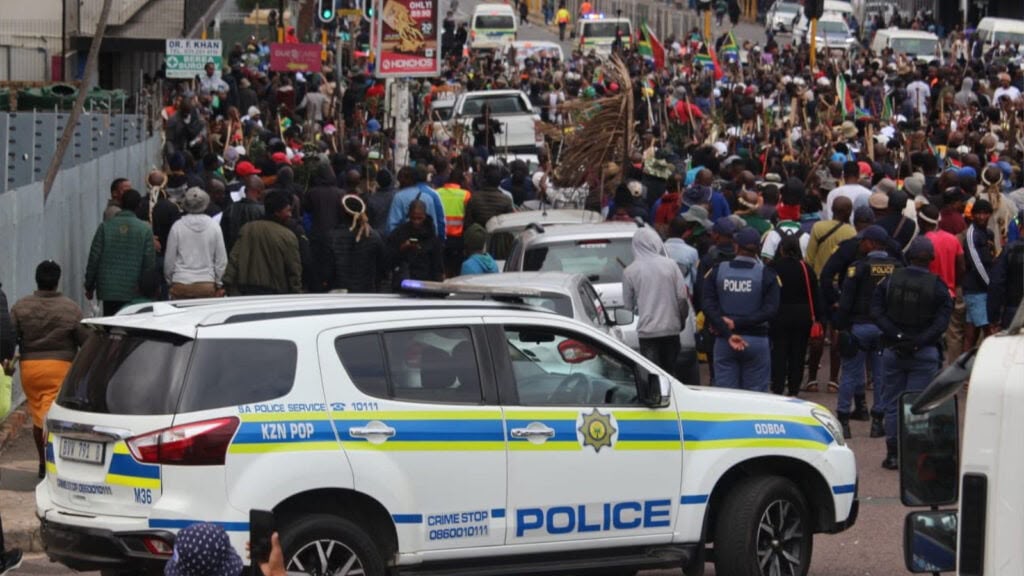
South Africa is bracing for a nationwide day of mass action on Wednesday, 30 September, with the protest movement March and March planning demonstrations in major cities across the country.
The group, which organised nationwide demonstrations on 30 June over illegal immigration, has expanded its campaign to include a “Men’s March against GBV and Crime”, following the recent murders of at least 12 women across the country.
CALL FOR MEN TO TAKE A STAND
March and March has issued a direct call to South African men to join the action against gender-based violence and crime.
“We call upon all South African men to take to the streets across the country to speak in one voice and claim our society back from criminals. We are part of the problem, and we must fix it,” the group said in its announcement.
The move comes as South Africa continues to grapple with a wave of violence against women, with the recent discovery of multiple female bodies in Gauteng and the Western Cape sparking national outrage.
Marches are planned for Pretoria, Johannesburg, Durban, Cape Town, and other major cities.
A MOVEMENT WITH TWO MISSIONS
Wednesday’s demonstrations are expected to combine two separate issues: March and March’s continuing campaign against illegal immigration and its newly expanded call for action against GBV and crime.
The group has maintained that South Africa “is falling apart” and lacks sufficient resources to care for everyone.
“We don’t have enough schools, hospitals and buildings, but we find ourselves having to carry the burden for all of Africa,” said March and March leader Jacinta Ngobese-Zuma.
Ngobese-Zuma has pushed back against accusations that the protests are driven by xenophobia, arguing that pressure on public resources was at the root of the tensions and calling for a broader continental conversation about migration patterns.
RAMAPHOSA URGES CALM
President Cyril Ramaphosa used his weekly letter to the nation to appeal for unity ahead of the demonstrations, addressing both the GBV concerns and the immigration tensions at the centre of the protests.
“We cannot allow violence against women to define who we are,” Ramaphosa wrote.
On the question of foreign nationals, he emphasised that migration must occur within legal frameworks.
“The government has a responsibility to manage our borders effectively, and everyone who lives in South Africa is required to respect our laws,” he said.
POLICE ON HIGH ALERT
The South African Police Service has said it will continue with its normal policing operations, with officers focused on maintaining public order and responding to incidents.
SAPS has previously noted that the deadline set by March and March is “arbitrary and not supported by any official government channels”.
The June 30 protests drew thousands of people across the country. While much of the day remained peaceful, there were isolated incidents of looting, clashes, and other unrest. Reports pointed to at least one fatality linked to the protests, over 900 arrests, and millions of rands in business losses, largely restricted to the township economy.
BUSINESSES BRACE FOR DISRUPTION
The business community has expressed concern over the planned action. Ahead of the June 30 protests, Business Unity South Africa raised concerns about instability harming the economy and damaging the country’s image.
“We cannot have lawlessness. We cannot support anything that harms lives, harms property or affects business,” said BUSA CEO Khulekani Mathe.
Many businesses are expected to take precautionary measures, with some companies instructing employees to work from home and foreign-owned shops likely to remain closed for the day.