
South Africa Faces Growing Pressure to Sever Ties with Israel Amid Gaza Conflict
Natalie Nyathi
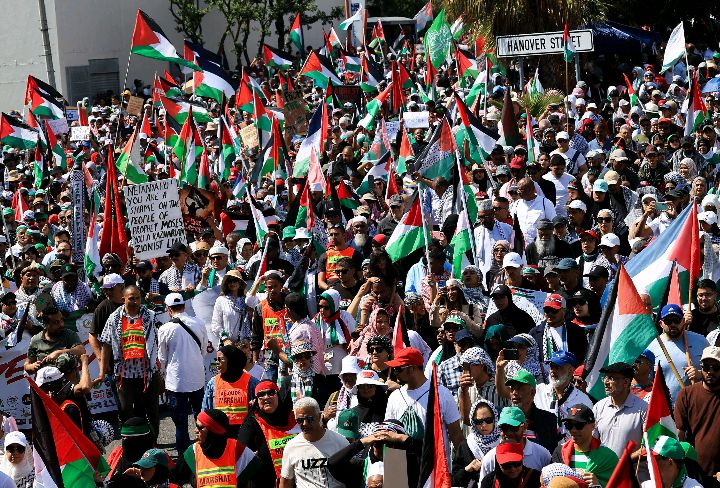
Thousands of protesters marched through Cape Town, yesterday ,urging the South African government to take decisive action against Israel, including cutting diplomatic and economic ties, due to the ongoing conflict in Gaza.
The protesters, representing a broad coalition of civil society groups, religious organizations, and political parties, delivered a memorandum to parliament outlining their demands. Key requests include the closure of the Israeli embassy in South Africa, the expulsion of the Israeli ambassador, and the imposition of sanctions to halt all trade and economic relations. Demonstrators specifically called for an end to coal exports to Israel and the prosecution of South Africans who may be serving in the Israeli military. Furthermore, they seek to exclude Israel from international sporting bodies like FIFA and suspend all cultural and academic ties.
Usuf Chikte, coordinator of the Palestine Solidarity Campaign, emphasized the need for South Africa to boycott, divest and sanction Israel, the same way as the world did for us, drawing a parallel to the international measures that helped end apartheid in South Africa. This comparison resonates deeply in South Africa, given its history of racial segregation and the struggle against apartheid.
South Africa has long been a vocal critic of Israel’s policies towards Palestinians. The government has openly voiced its support for Palestinian self-determination and has often condemned Israel’s actions in international forums. In a significant move, South Africa brought a case against Israel before the International Court of Justice, accusing Israel of committing genocide in Gaza. South Africa has also condemned Israel’s refusal to allow humanitarian aid into Gaza.
In the past, South Africa has taken steps to demonstrate its disapproval of Israeli policies. In 2019, the country downgraded its embassy in Israel. Despite these actions, South Africa has maintained some level of diplomatic and economic engagement with Israel, arguing that continued dialogue allows them to play a role in ending the occupation of Palestine. As of early 2024, South Africa maintained limited political and diplomatic interaction with Israel.
While there is significant public support for cutting ties with Israel, the decision is not without its complexities. Israel is a notable trading partner for South Africa, with trade between the two countries reaching millions of dollars annually. Key exports from South Africa to Israel include diamonds, coal, and fruit juice, while South Africa imports diamonds, pesticides, and broadcasting equipment from Israel. Completely severing these economic ties could have economic repercussions for both nations.
Historically, South Africa and Israel had close relations, particularly during the apartheid era, rooted in strategic and military cooperation. However, since the end of apartheid in 1994, South Africa has increasingly distanced itself from Israel due to its policies towards Palestinians.
The protesters’ demands also invoke international law, particularly concerning the crime of apartheid. Apartheid is defined as inhuman acts committed for the purpose of establishing and maintaining domination by one racial group of persons over any other racial group of persons and systematically oppressing them. The International Convention on the Suppression and Punishment of the Crime of Apartheid, adopted in 1973, declared apartheid as a crime against humanity.
While the applicability of the term apartheid to the Israeli-Palestinian conflict is a subject of ongoing debate, the protesters are urging the South African government to recognize and act upon what they see as a clear violation of international law. They are calling for the enforcement of an Apartheid Bill in South Africa, which would domesticate international obligations to make apartheid a crime, regardless of where it is committed.
As South Africa grapples with these complex issues, the government faces a difficult decision balancing its commitment to human rights and international law with its economic and diplomatic interests. The actions it takes in the coming weeks will likely have significant implications for its relationship with both Israel and the international community.