
“We Did Not Do Well”: ANC Acknowledges Failure After Losing Ground In Soweto
The African National Congress has acknowledged that its failure to deliver basic services contributed to its declining support in Soweto and Emfuleni, conceding that voters had punished the party for years of unreliable water, neglected roads, and failing municipal infrastructure.
In a statement issued on 7 November, the party admitted: “We did not do well in this election. Our support has fallen. We have lost councils we have governed for a long time”.
The ANC also conceded that communities had suffered from unreliable water supplies, neglected roads, and failures in municipal spending.
THE SOWETO VERDICT
The admission comes after ActionSA made historic gains in Soweto, a township that has been an ANC stronghold since 1994.
In Protea Glen’s Ward 135, ActionSA secured 33.1% of the vote, compared to the ANC’s 21.1%. ActionSA leader Herman Mashaba also celebrated victories in Soweto’s Wards 47 and 48, with Kabelo Moatshe and Kgadi Mogatusi elected as new councillors.
The most symbolic loss came in Dobsonville’s Ward 48, where ActionSA snatched victory from the ANC for the first time in the ward’s history. The DA, which had poured resources into the area, received only a fraction of the vote.
“The truth is when voters have a trust issue with you, you can’t buy your way out of that,” said ActionSA national chair Michael Beaumont. “You’ve got to campaign your way out of it. You’ve got to deliver”.
MBALULA: “OUR HISTORY DOES NOT GIVE US AN ENTITLEMENT TO GOVERN”
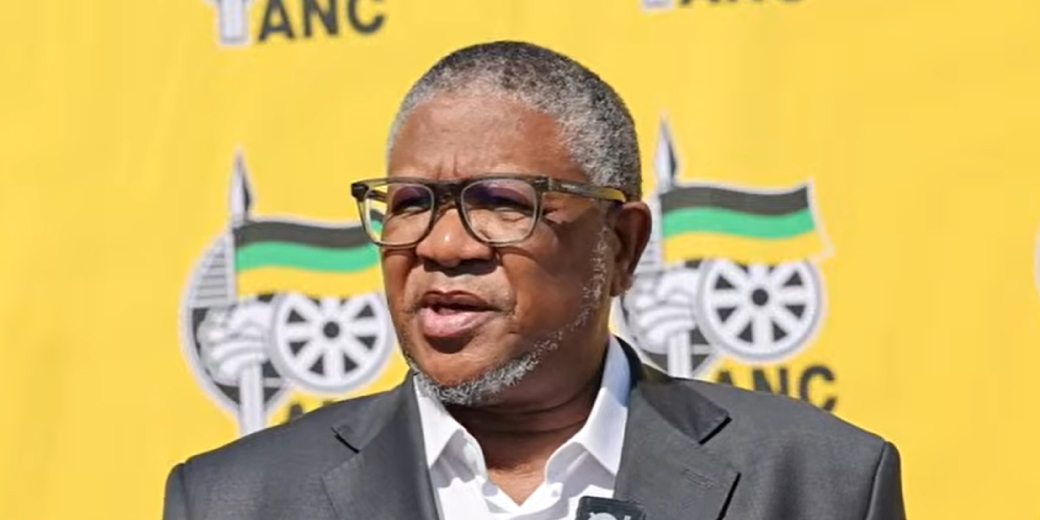
ANC Secretary-General Fikile Mbalula offered a blunt assessment of the party’s performance, describing the outcome as “catastrophic” and acknowledging that the party could no longer rely on its liberation credentials to win votes.
“Our history gave us a responsibility to serve. It does not give us an entitlement to govern,” Mbalula said.
He said ANC volunteers going door to door faced complaints about water shortages, electricity problems, and the rising cost of living, making it hard to defend the party’s record.
“You don’t need many ways to convince the person who doesn’t vote for the ANC,” Mbalula said.
He also acknowledged that internal divisions, particularly over candidate selection, had weakened the party in some communities, with residents responding by voting for independent candidates or supporting individuals overlooked by the ANC.
THE NATIONAL PICTURE
Nationally, the ANC’s support plummeted to 30.76%, down from 45.59% in the 2021 local elections, a decline of nearly 15 percentage points.
The DA followed at 24.64%, while the MK Party, contesting its first local government election, secured 9.76%.
In Johannesburg, the ANC’s share fell to approximately 20%, with the DA leading at around 35%.
EMFULENI: A WARNING SIGN
The ANC’s losses were not confined to Soweto. In Emfuleni, the DA was leading with 40.7% of the ward vote against the ANC’s 23.9%.
ANC Sedibeng regional secretary Jason Mkhwane acknowledged that dissatisfaction with service delivery may have contributed to the decline.
“As the ANC, we understand their frustration, and we accept that dissatisfaction with service delivery may have contributed to the decline in our support,” Mkhwane said.
“Having led Emfuleni for many years, we have a responsibility to reflect honestly on where we fell short”.
WHAT THIS MEANS FOR SOWETO
For Soweto residents, the ANC’s admission of failure is cold comfort.
“We have been telling them for years that our taps are dry and our streets are dirty,” said a Dobsonville resident who asked not to be named. “They only listened when we stopped voting for them.”
The coalition negotiations now underway in Johannesburg will determine who controls the city’s budget and how resources are allocated to Soweto. Whether the next administration—whatever shape it takes—will fare better than the last remains to be seen.
Mbalula acknowledged as much, warning that the ANC faces an “existential crisis” if it does not change course.
“If we don’t change on these things… we are then facing what we call an existential crisis,” he said. “We will go away by 2029” .